Still Here, Still Fighting
I wrote this as a snapshot of where I was at 18, trying to survive A-levels and grief, and I am proud I never stopped moving.

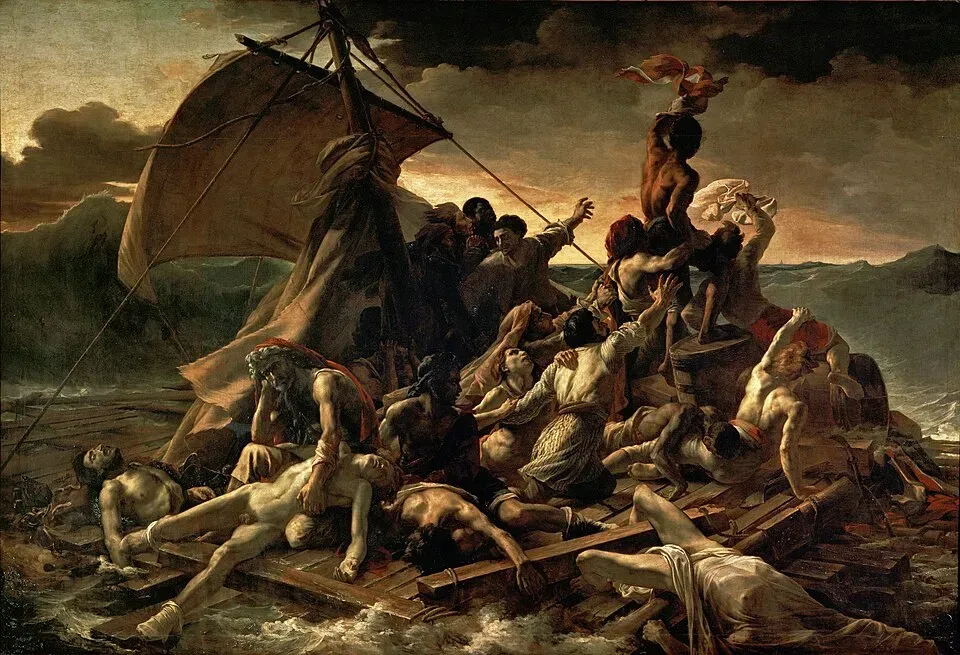
There’s a painting called “The Raft of the Medusa” - survivors clinging to wreckage in a dark ocean, some already dead, others barely holding on, one figure raised up pointing at something in the distance. Maybe rescue. A signal and sign of hope in all the chaos, which reflects my current state of mind. I’m 18, supposed to be studying for A-levels, supposed to be planning my future.


Instead, I’m lost in my head. Drowning in the sea of my chaotic thoughts. My bike knows every midnight road between here and nowhere. They say everything happens for a reason. I say sometimes shit just happens and you deal with it or you don’t.
Self Destruction
The thing about being so independent is that you become your own quality control. There’s no one there to check you, no one to tell you when you’re right or wrong. And when you are right, some people won’t tell you anything real - they’ll just bootlick and sugarcoat everything because they wanna see you fall. So you learn to watch everyone, trust no one fully, figure everything out yourself. Keep your allies close but your enemies closer.
Without external checks, I became my own worst critic. I hold myself to insanely high standards across everything. Academic performance, robotics, swimming. When I don’t meet my own expectations I beat myself up hard. I just shut down, keep quiet, isolate, think everything’s my fault. The typical Asian mindset haha.
And I’ve learned to keep quiet because speaking up only makes things worse. Try to explain myself? I get slapped with accusations that I’m being defensive, that I’m brushing off other people’s feelings, that I don’t care. So I stay silent instead.
But here’s the fucked up part. Even when I do succeed, people tell me to be humble. When I saved the CCA, turned it from a gaming den into something functional by stepping up and sacrificing my time, grades, and sleep from sec 2 to sec 4, I never boasted about it, never told anyone about what I’m doing and hope that the results speak for themselves. But people still claimed I didn’t actually save it, that I was just taking credit for other people’s work. Worse, some told me I’m cocky and egotistical. That shit hurts when you’ve put everything into something and you can’t even be proud of what you’ve built without getting torn down for it.
They don’t care or bat an eye about you when you’re struggling, when things are falling apart. But suddenly when everything’s successful and running smoothly, they all want a slice of the pie.
So I internalized it. Stopped recognizing my past achievements. Started thinking they’re all worthless in this pursuit of humility so other people feel good about themselves. I show no self-love or self-respect because I keep letting others’ opinions control me.
The independence that was supposed to make me strong just made me vulnerable in a different way. I want people to give a shit about me but at the same time I don’t want to talk to anyone. Super independent one moment, then suddenly caring way too much what people think. In the end I let other people decide how I live, how I think, what I do and shouldn’t do.
Somewhere along the way I learned that I’m only deserving of love or recognition if I do other’s bidding. When I’m constantly doing things for people, solving their problems, being there for them - that’s when they stay. Keep showing up for people but no one shows up for me. But the moment I stop giving, the moment when I cannot give anymore due to some reasons, I keep quiet, I stop giving, they think I’ve changed. They don’t check up on me and assume I’m inconsistent. I’m different. And then they leave at my lowest point.
A friend told me once: “You’re your own worst enemy, man. If someone else was talking about you the way you talk about yourself, I’d fight them for you. But I can’t fight you for you. And here’s the thing. You wouldn’t take your worst enemy’s opinion seriously, right? So why the fuck are you listening to yourself when you’re tearing yourself down like this?”
He’s right. I wouldn’t let anyone else talk about my friends the way I talk about myself. But when it’s internal, when it’s your own voice doing the damage, you start believing it’s truth instead of sabotage.
Night Rides Through the Void
Singapore never sleeps. From Orchard’s LED screens to CBD towers glowing like electric mountains. But the rail corridor at 3am exists in a different Singapore entirely. No lights except faint pollution bleeding orange into clouds, just you, the bike, cold jungle wind, and darkness that swallows everything beyond your front wheel. The cold jungle air hits different from the manufactured AC of malls. It carries moisture, decay, life, death, all mixed into something that reminds you nature exists even in Singapore. Your thoughts get loud when there’s no visual distraction. All those voices you suppress during daylight come flooding out, demanding attention. Most people fear this. I seek it out.
Fixed gear means no coasting. Your legs can’t stop spinning or the bike throws you forward. Where the bike is the extension of your body and a symbolism for the driving force in your life. No neutral, no rest, just constant motion. Life should come with the same warning label.
While some chase speed-therapy on Fast Fridays with their crews, I ride solo. I don’t bleed asphalt tears, I bleed into jungle floor, where the ground keeps secrets. Out there no one will, and no one can, hear the small sounds the mind makes when it buckles, and that silence mirrors the voices in our heads, suffering on mute, crying on the inside, not knowing who to talk to or how to open up. Help is just one text message away but some fail to reach out. We are so connected yet so isolated from the rest of the world, confined to our own consciousness.
The moon barely penetrates the canopy, throwing dim silver on the path when clouds shift. It’s enough to see the dirt track exists, not enough to see what’s on it. This darkness feels ancient, like Singapore before the lights, before the development, just jungle and night sounds.
Meanwhile, a kilometer away, someone’s probably queuing for supper at Lau Pa Sat under bright fluorescents. Two worlds, same island, vastly different realms.
Pushing through that tunnel with zero visibility is exactly like drowning in despair. You don’t know what lies ahead, can’t see when the suffering ends, when the darkness breaks. When flashbacks hit, I can’t stop to process them. Cruel mercy, forcing progress when everything inside wants to freeze. Even though I’ve done this rail corridor route countless times, there’s always unexpected turns where the path shifts. You can’t see them coming, just have to feel the subtle change in air pressure, the way sound bounces differently, predict the corner before you’re in it. Life passes through quickly, no time to process, only react.
Some nights I ride past the places that mean a lot to me and trigger both happy and sad memories. Not intentionally, just happens on the longer routes. Used to feel like picking at a wound. Now it’s just geography. These streets know my secrets, they’ve seen me at my worst, racing thoughts I can’t outrun, trying to exhaust myself into feeling something other than numb. Maybe moving forward means passing through old pain without stopping to visit.
Then you burst out near Bukit Timah, and suddenly there’s streetlights again, civilization, the familiar glow of 24-hour coffee shops. That transition hits like surfacing from deep water. But the ride’s not done. I push through to Orchard, emerge right into the heart of Singapore’s never-ending party. Clarke Quay at 4am still pumping music from some rooftop bar, tourists stumbling around. The contrast is violent—from absolute darkness to this electric circus.
I’ll sit by the river at CQ with my bike, watching the city refuse to sleep while my legs still shake from the corridor. The Singapore River reflects all those lights, turning black water into liquid neon. I’m just another ghost in Singapore’s 4am population, the insomniacs, shift workers, party stragglers, and the lost.
The breeze hits different when you’re stationary after hammering through darkness. PCN path from CQ to Alexandra becomes meditation, smooth concrete instead of dirt, streetlights every fifty meters like breadcrumbs leading somewhere safer and start my journey home.
That transition from Singapore’s electric heart back into primitive darkness teaches what therapy never could. The city’s lights are just makeup on something older, something that still exists if you know where to look. You don’t conquer darkness by staying in the light. You learn to move between both worlds.
Some nights I ride that corridor multiple times, diving back into darkness soon as I emerge. Each entry is different even on familiar ground. The darkness shifts things, hides obstacles you swore weren’t there before, changes the path just enough to keep you guessing. Like trauma recovery, you think you know the route then suddenly there’s a new corner, a root across the path, forcing you to constantly adapt to the situation.
Singapore continues its electronic pulse around me, but the rail corridor remains, this vein of darkness cutting through our lit-up island. Both are real, both are home, both teach different truths about survival. The city says never stop, never sleep, keep producing. The corridor says something else:
Sometimes you need darkness to remember what light means
One day I’ll stop needing these nights. One day the contrast won’t feel necessary. One day I won’t need to disappear into the darkness and resurface into electric light. But for now, the rail corridor at 3am is my proof that forward motion doesn’t require hope or healing or even belief. Sometimes it just requires pedaling through uncertainty, trusting that somewhere ahead there’s always Clarke Quay’s lights, waiting to embrace me in its warmth.
The Art of Letting Go
Some people tell me they forgive those who hurt them but the hurt never actually leaves. They carry it around, let it build up over time, this growing weight of old pain that keeps cutting them fresh. That’s not letting go, that’s just relabeling the cage you’re stuck in.

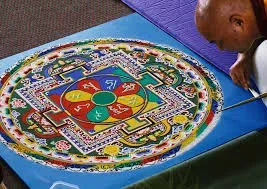
Tibetan Buddhist monks create these intricate sand paintings called mandalas - in Tibetan, dul-tson-kyil-khor, literally “mandala of colored powders.” They spend days, sometimes weeks, painstakingly placing millions of grains of colored sand into elaborate geometric patterns representing the universe and Buddhist cosmology. Then they perform the Dissolution Ceremony and sweep it all away. No attachment. No grief. The mandala existed, served its purpose, now it’s gone.
The destruction isn’t tragic - it’s the entire point. It reminds us of the impermanence of life. Nothing lasts forever. Everything ends. The monks don’t stand there mourning the lost art or replaying memories of making it. Their focus is on the act itself, not a lasting reward for that act, and after creating a thing of beauty, they destroy it in a gesture of non-attachment to their efforts. It just was, and now it isn’t.
That’s real letting go. Not forgiving someone while still bleeding from their cuts. Not pretending the hurt doesn’t exist. It’s about the memory losing its power to destabilize you. Like wind passing through trees - the trees don’t hold onto the wind, don’t try to catch it or fight it. They bend, let it pass through, return to center. The wind was there, now it’s not, the tree remains unchanged.
The bike taught me this in a way therapy never could.
Fixed gear means constant motion. You can’t coast, can’t take a break from pedaling. Every rotation of the wheel is directly connected to your legs. At first you fight this - try to control every moment, grip the handlebars tight when shit gets sketchy, tense up when you can’t see what’s coming.
That’s when you crash.
When you’re traveling at high speeds through narrow gaps - tight spaces between parked cars, the narrowing sections of the rail corridor. The tighter you grip the handlebars, the more you trigger that death wobble you see on motorcycles. Your rigid arms transfer every tiny vibration into the frame, amplifying it until the whole bike starts shaking uncontrollably. The wobble feeds itself. More fear means tighter grip means worse wobble means more fear. Eventually you’re fighting the bike instead of riding it.
But when you relax your grip, trust the geometry, let the bike do what it’s designed to do - it flows through. The gap that looked impossible at speed becomes navigable. Not because you controlled harder, but because you controlled less.
In the rail corridor darkness when you can’t see the turns coming, when roots appear suddenly under your wheel, when the path shifts without warning - fighting it gets you thrown. The bike doesn’t care about the corner you hit five kilometers ago. It only responds to now.
You learn to lean into the turns instead of fighting them. Trust the momentum, trust the angle. The physics work whether you believe in them or not. Fighting makes you rigid. Rigidity makes you fall. Flow keeps you upright.
Same with trauma. You can grip tight to what happened, replay it constantly, let it control every decision. Or you can acknowledge it existed, learn from it, then move on. The trauma doesn’t disappear, looking back you can still see that those corners are still part of the route.
I used to tense up passing certain spots on my routes. Places that reminded me of specific pain, locations tied to memories I’d rather forget. Each time felt like picking at a wound. But the bike keeps moving regardless. You pass through whether you want to or not. Eventually those places just became geography. The memories exist but they don’t hijack the ride anymore.
Sometimes you crash anyway. Hit a root wrong, take a corner too fast, lose control despite knowing better. When that happens, you pull over to the side, sit in the grass for a bit, assess the damage, clean the cuts. But then you get back on and keep riding. Because the journey doesn’t pause just because you fell. You pick yourself up, adjust your grip, and continue on. That’s the only choice that makes sense.
Some things will hurt forever. The people who should’ve protected you but didn’t, the betrayals that taught you trust was dangerous. That pain is valid. But here’s what I’ve learned: you can’t control whether the pain stays, but you can control how you carry it.
You can carry it like cargo, dead weight strapped to your back, slowing every pedal stroke. Or you can carry it like experience, something that happened, taught you lessons, changed your route, but doesn’t stop you from moving forward.
The rail corridor doesn’t care about your trauma. The darkness doesn’t hold grudges. The path just exists, neutral, waiting for you to ride it. Whether you crash or flow through depends on how you respond to what’s in front of you now, not what was behind you five kilometers back.
The monks understand something most people miss - the beauty wasn’t in the sand painting itself. It was in the act of creating it, the discipline, the focus, the temporary nature reminding them nothing is permanent. Sweeping it away isn’t loss. It’s proof they’re not attached to outcomes, only to the practice of showing up.
So that’s what I’m learning. Respond to what’s actually happening instead of what happened before. Let the wind pass through instead of trying to catch it. The hurt happened. It’s part of the route now. But it doesn’t get to control how I handle the rest of my life.
The People Who Caught Me
In my darkest moments, there were people who just showed up. Not because they owed me. Not because I saved them first. Just because they saw something in me that I couldn’t see in myself.
They looked past the trauma, past the insomnia, past the self-destruction and they saw through the armor I wear to survive. They saw past me holding up the weight of everyone’s expectations like Atlas.
Their words and warmth pierced through the coldness I wrapped myself in. Through the relentless pursuit of excellence that kept me running on empty. They didn’t just see the pain - they related to it. They knew what it felt like to carry too much alone.
So they tried to help offload some of my burden. Not by fixing me. Not by demanding I be better, be perfect, heal completely. They understood that’s not what scars are. Scars don’t disappear. They don’t make you whole again. They’re permanent marks of what you survived.

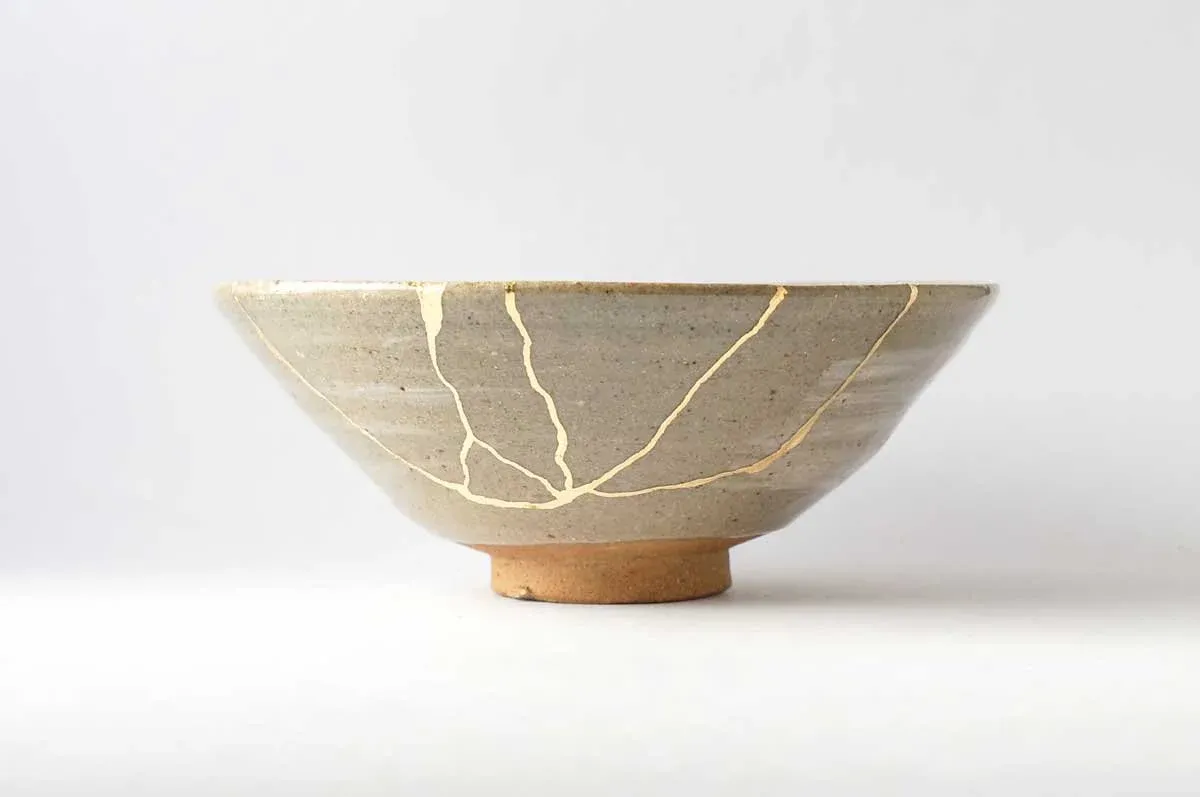
There’s this Japanese art called kintsugi - when pottery breaks, instead of throwing it away or hiding the cracks, they repair it with gold. The breaks become part of the design. The piece is more valuable because it broke and was repaired, not despite it. The cracks are highlighted, not hidden.
That’s what these people saw. Not broken pottery that needed to be discarded. Not cracks that needed to be covered up. They saw kintsugi - someone whose breaks could become part of something stronger, more beautiful, more real.
What they said instead was simpler
“Vincent, don’t let the trauma define who you are.”
People see my circumstances and write a story. Troubled kid. Traumatized. Damaged goods. Someone who’s gonna snap eventually, become bitter, turn cruel. They see the scars and assume that’s the whole person.
But these people saw different. They saw the innocent self underneath - the person I was before everything tried to break me. They reminded me that my trauma doesn’t define my character. That being hurt doesn’t mean I have to become someone who hurts. That the scars are part of me now, but they’re not all of me.
That’s what keeps me going. Not erasing the damage. Not pretending the scars don’t exist. Just remembering that who I am at my core - that innocent self they see past all the armor - is still there. Still worth protecting. Still worth fighting for. Still deserving of love.
They believe in a version of me that exists beyond the pain. And when I can’t see it myself, I borrow their eyes.
That’s my driving force. Not becoming who my trauma says I should be. Being who they see I still am.
The Weight We Carry
Darkness exists whether you acknowledge it or not. Singapore can dress itself in lights, pretend everything’s perfect, but that jungle darkness remains, cutting through our island like a scar that won’t heal. We all have our own corridors. Some people drink through theirs. Some work themselves to death. Some pretend it doesn’t exist.
When friends reach out to me for clarity, I tell them what Kamina taught me:
“Believe in the me who believes in you.”
Because sometimes you can’t see your own worth through the fog. Sometimes you need to borrow someone else’s eyes and see how much your existence means to them before you resolve a temporary problem with a permanent solution.
That borrowed belief is just temporary scaffolding. Like someone running beside your bike until you find your balance. Eventually you yourself, not your significant other, not your therapist, YOU, need to rebuild your own foundation. But in those 3am moments when everything’s falling apart, sometimes all you have is someone else’s faith that you’ll make it through.
一切唯心造
Whether you pull yourself out of the shitty hole you’re in or just continue crying in your puddle, that’s all up to you. Your mind controls how fucked the situation feels. Tell yourself you’re going to fail and of course you’re going to fucking fail when you’ve already written the ending before you’ve started.
The reason people keep preaching self-love isn’t some feel-good bullshit. When the world’s already treating you like shit you can’t afford to join them in the beating. You need to be on your own side because sometimes you’re the only one who is.
Remember: you only live for yourself.
Not for your parents’ expectations. Not to fulfill someone else’s dream of who you should be. Not to meet Singapore’s definition of success. You are in control of your own reality and how you perceive it. The grades, the career path, the life script everyone’s written for you, none of that matters if you’re dead inside following it.
Sometimes the mind needs the body to lead. Sometimes wisdom comes through motion, not meditation. Sometimes healing happens in the doing, not the thinking, in showing up to class even when you’re empty, in getting out of bed when staying there feels safer. Action forces what the mind resists, progress even when everything inside wants to stop.
Small victories matter such as making it to sunrise, finishing that assignment, eating something. The stupid stubborn refusal to let the bastards, the demons in your head win.
There’s power in taking back control of your own life rather than letting it control you. But there are some things you can’t control, and trying to will drain you dry. But the only constant is controlling how we perceive and react to the situation.
Regrets are evidence that we once cared. Growth is the sign that we’re ready to move on, to become better. Not perfect, just better than we were yesterday. Focus on the small wins. Celebrate them instead of waiting for that big breakthrough that might never come.
Not rescued not ashore, just still on the raft, scanning the horizon, refusing to give up.